
Introduction – The Trial in the Context of World Literature
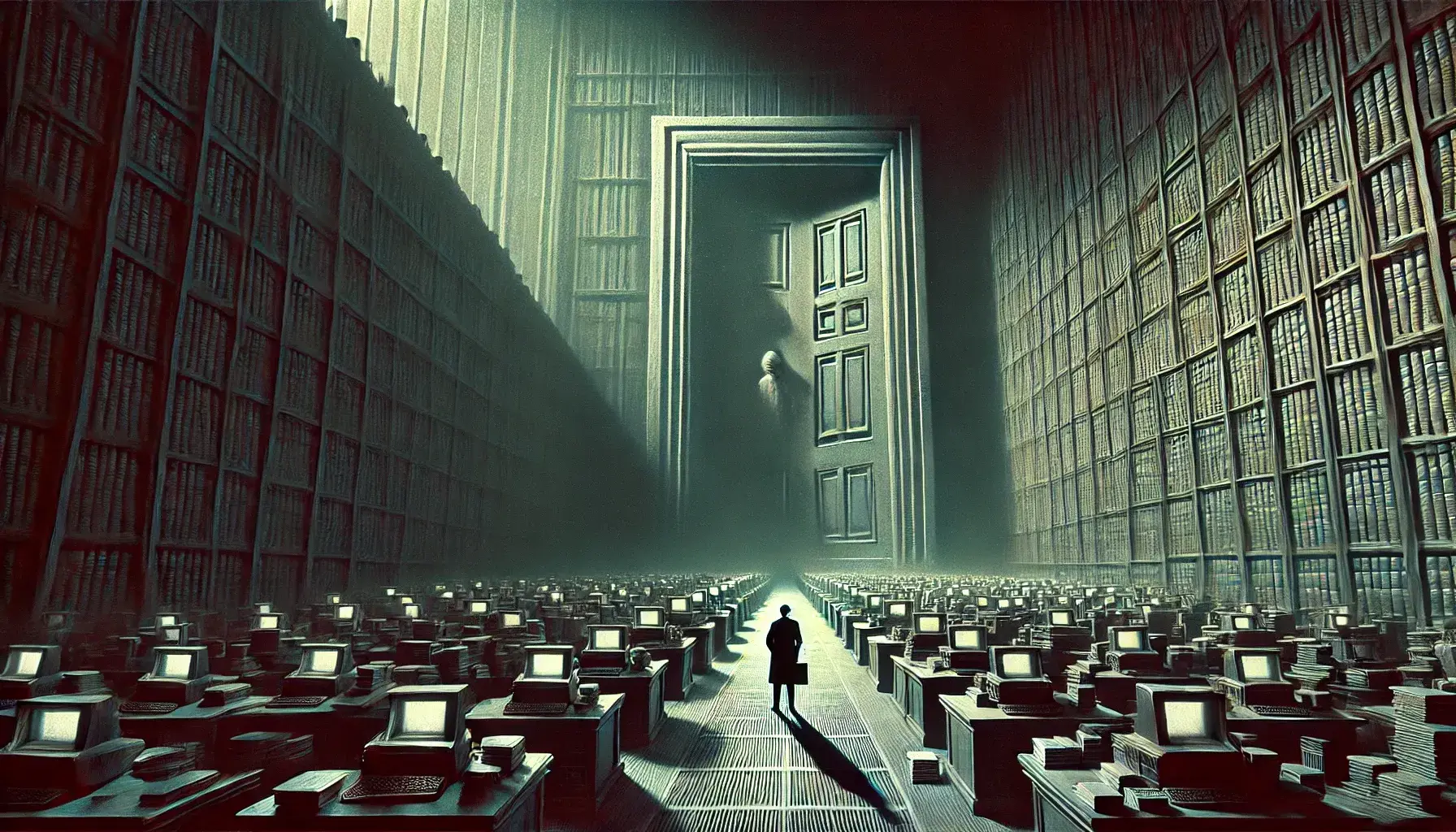
Franz Kafka’s The Trial (Der Prozess) is one of the most enigmatic and thought-provoking literary works of the 20th century. While deeply rooted in existentialism and absurdism, it can be compared to well-known classics such as George Orwell’s 1984 and Animal Farm. These works, like The Trial, explore themes of bureaucracy, oppression, and the struggle of an individual against an incomprehensible system. In 1984, Winston Smith is trapped in a totalitarian state where he is constantly surveilled and ultimately crushed by an all-powerful system. Similarly, in The Trial, Joseph K. finds himself ensnared in a legal and bureaucratic process that remains opaque and arbitrary, with no clear crime or chance of redemption. If you enjoy dystopian literature that critiques power structures and human helplessness, The Trial is a must-read.
My Experience with The Trial
Recently, I listened to The Trial as an audiobook, wanting to finally experience this iconic novel after frequently encountering references to it. It was both fascinating and challenging. The novel’s abstract and symbolic nature made it difficult to fully grasp, and I often found myself researching interpretations to better understand certain elements. Perhaps listening to it in short segments contributed to this difficulty, as its complex structure and philosophical undertones require deep reflection.
I would like to revisit this book in its physical form in the future. I have a feeling that a more immersive reading experience could reveal even deeper meanings, especially with more life experience. Despite its challenges, the novel is captivating – it tells a coherent story, yet I feel that individual chapters could function as separate tales, each carrying its own symbolic message. A prime example is the famous parable Before the Law, which could stand alone as an allegorical short story with deep meaning.
Unclear Themes and Motifs
While listening to the book, I encountered several moments that left me puzzled. For example, the visit to Miss Bürstner’s room and her reappearance towards the end of the novel seemed mysterious to me. Her role in the story is unclear, and I do not fully understand why Kafka included her in these key moments. This unresolved mystery adds depth to the book and reinforces its surreal, dreamlike atmosphere.
One of the most striking aspects of The Trial is its depiction of suffocating bureaucracy. Joseph K.’s constant struggle against an incomprehensible legal system mirrors the real-life experiences of people dealing with rigid institutions. The book also raises fundamental existential questions about the meaning of life and the weight of external judgment.
A theme that resonated deeply with me was the idea of being judged for something one has not done. In life, we often face unfair criticism from friends, family, or society based on incomplete or distorted information. An example is the end of a relationship – a breakup may happen for various reasons, yet outsiders may judge and demand explanations as if we were guilty. This social “trial” can feel just as arbitrary and unjust as the one Joseph K. experiences.
The Doorkeeper – A Parable on Taking Action
One of the most important parables in the novel, The Doorkeeper, appears towards the end of The Trial. Although written in a biblical style, it is an original creation by Kafka. The story tells of a man who waits his entire life at a gate, asking for permission to enter, only to be told on his deathbed that the gate was meant for him alone. This parable carries a powerful message – sometimes, it is not necessary to ask for permission, but to act. Just like the protagonist of the story, we may allow fear, laziness, or blind obedience to prevent us from reaching what was meant for us.
Conclusion
Kafka’s The Trial is a book that leaves more questions than answers. Its abstract nature allows for countless interpretations, making it a novel worth revisiting. The themes of bureaucracy, existential anxiety, and social judgment are just as relevant today as they were in Kafka’s time. If you enjoy novels that challenge your perception of reality and force you to reflect on the nature of authority and personal agency, The Trial is a must-read.
I look forward to reading it again in the future—this time in its full text form, hoping to uncover even deeper layers of meaning.